
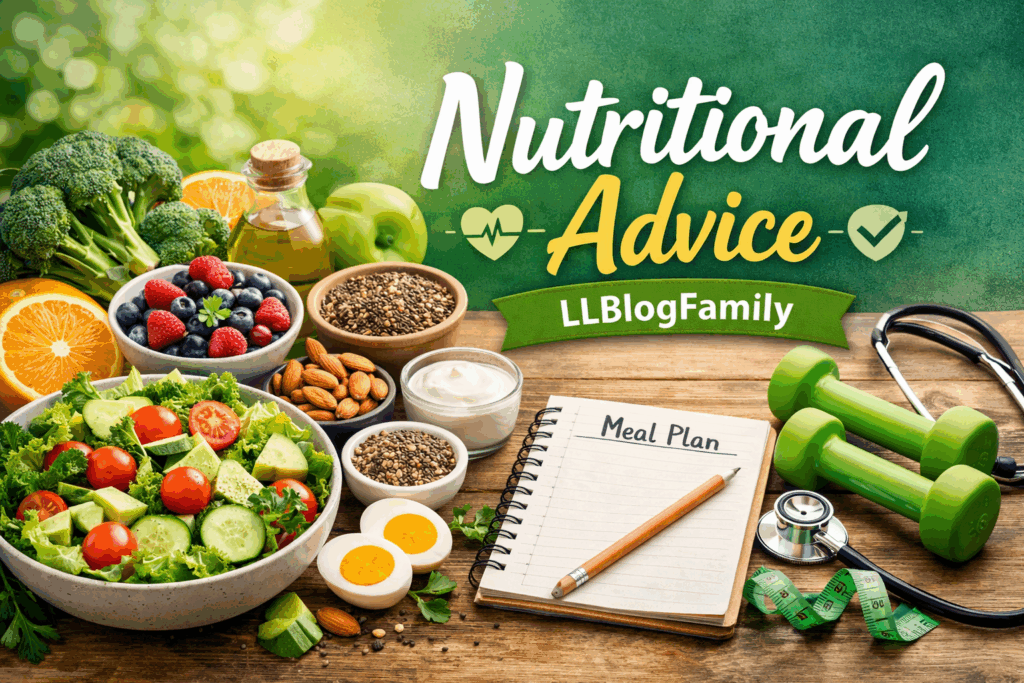
Feeding your family well does not have to feel like a full-time job. Whether you are a parent trying to get more vegetables onto your children’s plates, a couple working toward healthier habits together, or someone who simply wants to understand what “eating right” actually looks like in everyday life, the right nutritional advice can change everything. The problem is that most nutrition information online is either too technical to apply, too idealistic to sustain, or aimed at people with unlimited time and a chef’s kitchen. Real families in real places — like Franklin, Indiana — need guidance that fits into actual life. That is exactly what this article is about.
Why Family Nutrition Is Worth Prioritizing
It is easy to push nutrition to the back burner when life gets busy. Deadlines, school pickups, after-school activities, and exhaustion all compete with the goal of eating well. But the long-term cost of deprioritizing nutrition is significant. Children who consistently eat a diet high in processed foods, added sugars, and low-quality fats are at higher risk for childhood obesity, poor concentration at school, weakened immune function, and a range of chronic diseases that follow them into adulthood.
The encouraging side of this is that the reverse is also true. Families who make even modest improvements to their eating habits see measurable benefits — more energy, better sleep, improved mood, and fewer sick days. Nutrition does not have to be perfect to be effective. Consistent, gradual improvements produce real results over time, and those results compound. The child who learns to enjoy vegetables at age six is building a foundation that will benefit them at sixty.
Parents also need to recognize that their own eating habits are one of the most powerful influences on their children’s relationship with food. Kids watch what adults eat and take cues from it. Modeling healthy behavior — eating breakfast, choosing water over soda, enjoying a variety of foods without making it a big deal — quietly teaches children that nutritious eating is normal, not a punishment.
The Foundation: Build Meals Around Whole Foods
The single most effective nutritional strategy any family can adopt is also the simplest one: eat food that looks like food. Whole foods — vegetables, fruits, legumes, whole grains, lean proteins, eggs, nuts, seeds, and dairy — are naturally packed with the nutrients your body needs. They contain fiber, vitamins, minerals, antioxidants, and healthy fats in combinations that are difficult to replicate in a lab or a factory. This connects directly to what I discuss in health llblogfamily.
Processed foods, by contrast, are typically engineered to be hyper-palatable — meaning they are designed to override your brain’s natural fullness signals so you keep eating. They tend to be high in sodium, refined sugar, and unhealthy fats while delivering very little nutritional value per calorie. A diet built largely around processed foods leaves families overfed and undernourished at the same time.
The good news is that switching to whole foods does not require a dramatic lifestyle overhaul. Start with one meal at a time. Swap white rice for brown rice or quinoa. Trade packaged cookies for a piece of fruit and a handful of almonds. Replace sugary breakfast cereal with oatmeal topped with banana and cinnamon. Each small switch is a genuine improvement, and over weeks and months, those improvements add up to a fundamentally different — and much healthier — way of eating.
Feeding Kids Well: Strategies That Actually Work
Picky eaters are one of the biggest sources of frustration for parents trying to improve family nutrition. If your child refuses vegetables, insists on the same three foods every day, or gags at the sight of anything green, you are far from alone. Picky eating is developmentally normal, especially between the ages of two and eight. Understanding that takes some pressure off, but it does not make dinnertime less stressful. Here are approaches that genuinely help. I go into much more detail on this in nutrition guide llblogfamily.
Get kids involved in the process. Children are significantly more likely to eat food they helped prepare. Even toddlers can rinse vegetables or tear lettuce. School-age kids can stir, measure, and assemble. Teenagers can take on full recipes. When children feel a sense of ownership over what is on the table, their resistance drops considerably. It also turns meal prep into family time rather than a chore.
Use the “one new, one familiar” rule. Never serve a plate full of unfamiliar foods to a child who is already reluctant. Instead, pair one new or challenging food with two or three things you know they enjoy. The new food is present, they can try it without pressure, and there is still something on the plate they are happy to eat. Repeated, low-pressure exposure is how children eventually come to accept new foods — research suggests it can take anywhere from ten to fifteen exposures before acceptance occurs. Incorporating the “one new, one familiar” rule not only makes mealtime enjoyable for kids but also aligns perfectly with the values of the health llblogfamily, promoting a balanced approach to both nutrition and gaming performance. Incorporating the “one new, one familiar” rule can not only ease a child’s reluctance towards trying new foods but also create a positive mealtime experience that mirrors the supportive community found within the health llblogfamily, where shared insights and encouragement help everyone thrive.
Make healthy food the easy choice. Convenience drives eating decisions for both adults and children. A bowl of washed fruit on the counter will be eaten. A bag of grapes buried in the back of the fridge will not. Cut vegetables and store them at eye level. Keep a jar of mixed nuts on the counter. Fill a compartment in the fridge with single-serve hummus portions and carrot sticks. When the healthy option is the one that requires the least effort, people choose it.
Avoid food battles and reward systems. Forcing children to finish their plates, bribing them with dessert, or making a big deal out of rejected foods tends to backfire. It creates negative emotional associations with certain foods and can lead to disordered eating patterns later in life. Aim instead for a relaxed meal environment. Offer the food, eat together, and let children decide how much of what is on their plate they eat. Your job is to decide what healthy options are available. Their job is to decide whether and how much to eat.
The Role of Hydration in Family Health
Many families focus so much on food that they overlook what everyone is drinking. Hydration is a core component of nutrition, not a bonus. Water supports digestion, regulates body temperature, transports nutrients, flushes waste, and plays a critical role in brain function and energy levels. Even mild dehydration — losing just one to two percent of body water — can cause noticeable drops in focus, mood, and physical performance.
For most families, the goal should be to make water the default beverage. Keep a filled pitcher in the fridge. Encourage a glass of water before each meal. Send kids to school with a water bottle they enjoy using. If plain water is a hard sell, try naturally infusing it with sliced citrus, cucumber, or a few mint leaves — this adds flavor without any added sugar.
Sugary drinks are one of the most significant contributors to poor family nutrition and are worth taking seriously. Regular soda, sports drinks, flavored milks, and even 100% fruit juice all deliver a significant sugar load with little nutritional benefit. Juice in particular is frequently misunderstood — it removes the fiber from fruit, leaving behind concentrated sugar that spikes blood glucose quickly. A small glass occasionally is fine, but it should not substitute for water as a daily drink. To better navigate the pitfalls of sugary beverages and promote healthier choices, our latest nutrition guide llblogfamily offers invaluable insights for families striving to improve their overall nutrition. To combat the misleading perception of juice as a healthy choice, it’s essential for families to consult a comprehensive nutrition guide llblogfamily that emphasizes the importance of reducing sugary drink consumption for better overall health.
Meal Planning: The Most Underrated Tool in Family Nutrition

Ask any registered dietitian for their single best piece of practical nutrition advice and a large number of them will say the same thing: plan your meals. Meal planning removes the single most dangerous moment in family nutrition — the 6pm “I have no idea what to make for dinner” decision point. That moment is where fast food, frozen pizza, and drive-throughs win. A plan eliminates it entirely.
You do not need an elaborate system. Start by choosing four dinners for the coming week and writing a grocery list based on those meals. Pick recipes that share ingredients — for example, roasted chicken on Monday can become a chicken and vegetable stir-fry on Wednesday. Cook a large batch of grains like brown rice or farro on Sunday and use them throughout the week. Prep washed vegetables in advance so assembling meals takes minutes instead of half an hour.
For families who want a more detailed framework, the LL Blog Family nutrition guide breaks down weekly planning into manageable steps that work even with a packed schedule. Planning ahead also typically reduces grocery spending because you buy specifically what you need rather than shopping without direction.
Nutritional Needs Vary by Age and Stage
One important thing to understand about family nutrition is that different family members have genuinely different nutritional needs. A toddler, a teenager, a pregnant mother, and a middle-aged father all need different amounts of calories, protein, calcium, iron, and other key nutrients. A one-size-fits-all approach will inevitably fall short for someone at the table.
Toddlers and young children need adequate healthy fats for brain development, calcium for bone growth, and iron to support cognitive function. Teenagers — especially active ones — need significantly more calories and protein than younger children, along with calcium and vitamin D during their peak bone-building years. Adults need to pay increasing attention to fiber, magnesium, and heart-healthy fats as they age. The ideas here carry over into advice for family members of llblogfamily, which is worth reading next.
The health advice resources at LL Blog Family cover age-specific guidance in more detail, and consulting with your family doctor or a registered dietitian can help you identify any specific gaps worth addressing. Certain supplements — such as vitamin D, which is commonly deficient across all age groups, particularly in colder months — may be appropriate for some or all family members, but these decisions are best made with professional input rather than guesswork. For the latest insights on maintaining a balanced lifestyle while gaming, be sure to check out the fitness news llblogfamily, which offers tailored health advice and resources for every age group. For those looking to enhance their overall well-being through gaming, staying updated with the latest insights from fitness news llblogfamily can provide valuable information on age-specific health advice and essential supplements.
Eating Well Is a Long Game
Family nutrition is not a goal you achieve once and check off a list. It is an ongoing practice that evolves as your children grow, your schedule changes, and your household’s needs shift. There will be weeks where meal planning goes out the window, where fast food happens three nights in a row, and where the vegetables in your fridge go bad before anyone touches them. That is normal. What matters is not the bad weeks — it is what you do most of the time.
Progress over perfection is the only sustainable approach to family nutrition. Every whole food meal you cook, every water bottle you send to school, every new vegetable you introduce at the dinner table is a deposit into your family’s long-term health account. Those deposits accumulate quietly but powerfully over time. You do not have to be perfect to make a real difference. You just have to keep showing up and keep trying — and that is something every family in Franklin, Indiana, and everywhere else is absolutely capable of. fitness news llblogfamily.
 Ask Vynric Thorvale how they got into family activities and projects and you'll probably get a longer answer than you expected. The short version: Vynric started doing it, got genuinely hooked, and at some point realized they had accumulated enough hard-won knowledge that it would be a waste not to share it. So they started writing.
What makes Vynric worth reading is that they skips the obvious stuff. Nobody needs another surface-level take on Family Activities and Projects, Parenting Tips and Advice, Healthy Meal Ideas for Kids. What readers actually want is the nuance — the part that only becomes clear after you've made a few mistakes and figured out why. That's the territory Vynric operates in. The writing is direct, occasionally blunt, and always built around what's actually true rather than what sounds good in an article. They has little patience for filler, which means they's pieces tend to be denser with real information than the average post on the same subject.
Vynric doesn't write to impress anyone. They writes because they has things to say that they genuinely thinks people should hear. That motivation — basic as it sounds — produces something noticeably different from content written for clicks or word count. Readers pick up on it. The comments on Vynric's work tend to reflect that.
Ask Vynric Thorvale how they got into family activities and projects and you'll probably get a longer answer than you expected. The short version: Vynric started doing it, got genuinely hooked, and at some point realized they had accumulated enough hard-won knowledge that it would be a waste not to share it. So they started writing.
What makes Vynric worth reading is that they skips the obvious stuff. Nobody needs another surface-level take on Family Activities and Projects, Parenting Tips and Advice, Healthy Meal Ideas for Kids. What readers actually want is the nuance — the part that only becomes clear after you've made a few mistakes and figured out why. That's the territory Vynric operates in. The writing is direct, occasionally blunt, and always built around what's actually true rather than what sounds good in an article. They has little patience for filler, which means they's pieces tend to be denser with real information than the average post on the same subject.
Vynric doesn't write to impress anyone. They writes because they has things to say that they genuinely thinks people should hear. That motivation — basic as it sounds — produces something noticeably different from content written for clicks or word count. Readers pick up on it. The comments on Vynric's work tend to reflect that.